
SUBSTRAT supports artist-initiated projects while also operating as an independent curatorial platform, collaborating closely with artists to conceive and develop exhibitions. Beyond curatorial research and content writing, SUBSTRAT manages all aspects of projects, including administration, technical production, communication and PR.
AFTER SLEEPING MUSE
Group Exhibition
Künstlerhaus Sootbörn, Hamburg
2025
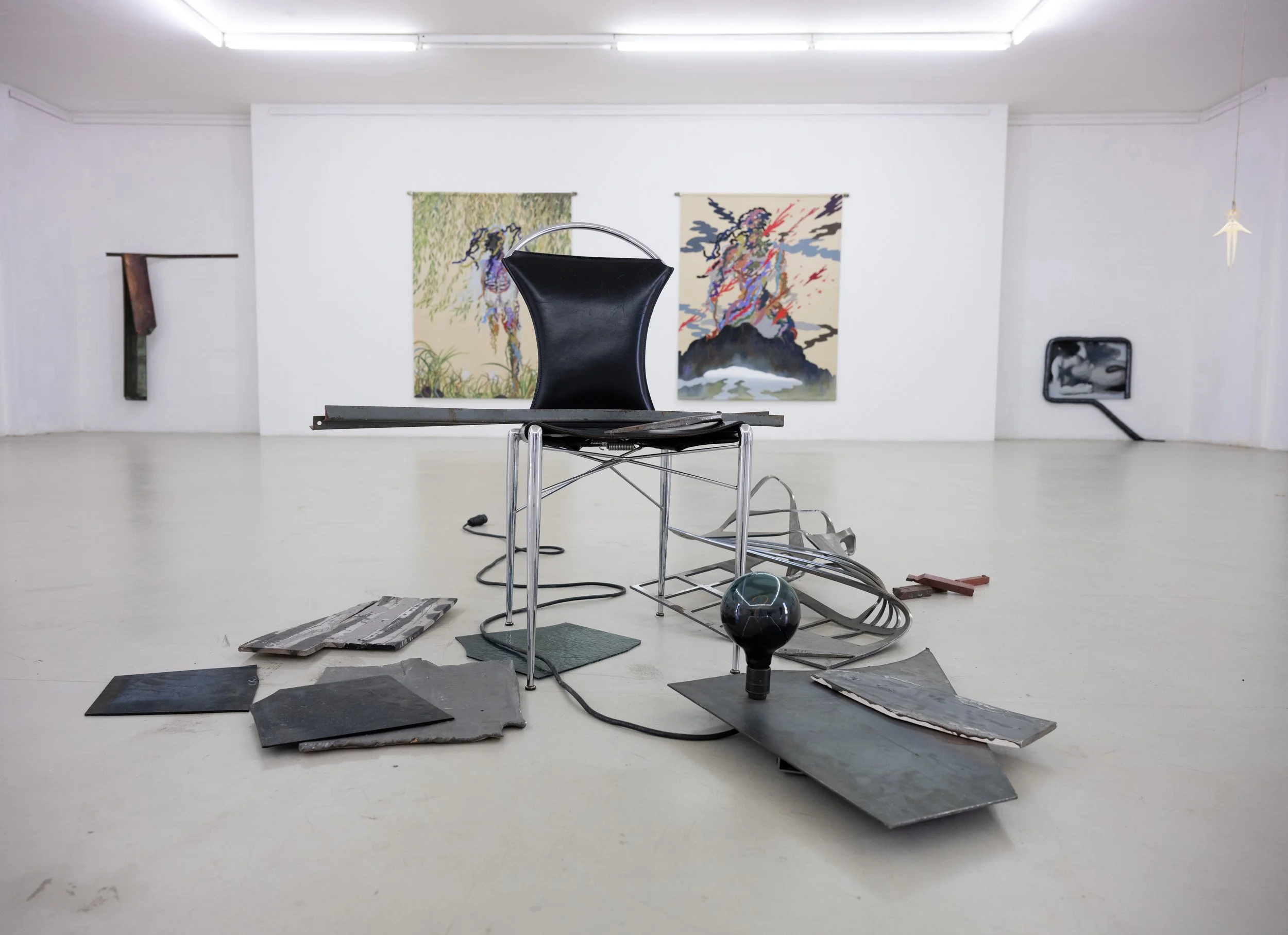
In Ion, Plato likens the Muse’s influence to a magnetic force: one that enchants and enchains, passing divine inspiration from gods to poets, from poets to performers, and finally to audiences through a “chain of iron rings”, in which “the Muse is the magnet and the poet the first ring.” Possessed by this force, the poet becomes en-theos—literally “inhabited by god”—a passive vessel caught in a chain of ecstatic transmission. In mythological accounts, this divine transmission is also described as the nectar the Muse places on the poet’s lips, making his verses sweet to the ear and irresistible, entwining Muse and artist into a quasi-erotic bond. The exhibition after sleeping muse revisits this magnetic chain from the other end, reconsidering the traditional dynamics of authorship and gendered projections of the feminine that have long defined the Muse’s role in art, literature, and film. What follows when the Muse is no longer a conduit for someone else’s vision, but awakens as the subject herself? Presenting work by nine women artists—Billie Clarken, Sarah Entwistle, Anna Kott, Jung A Lee, Alex Müller, Magda Stützer-Tóthová, Sandra Tirre, Halveig Villand, and Alungoo Xatan.
View More
A TWIST IN THE TALE
Group Exhibition
FLUTGRABEN, Berlin
2025
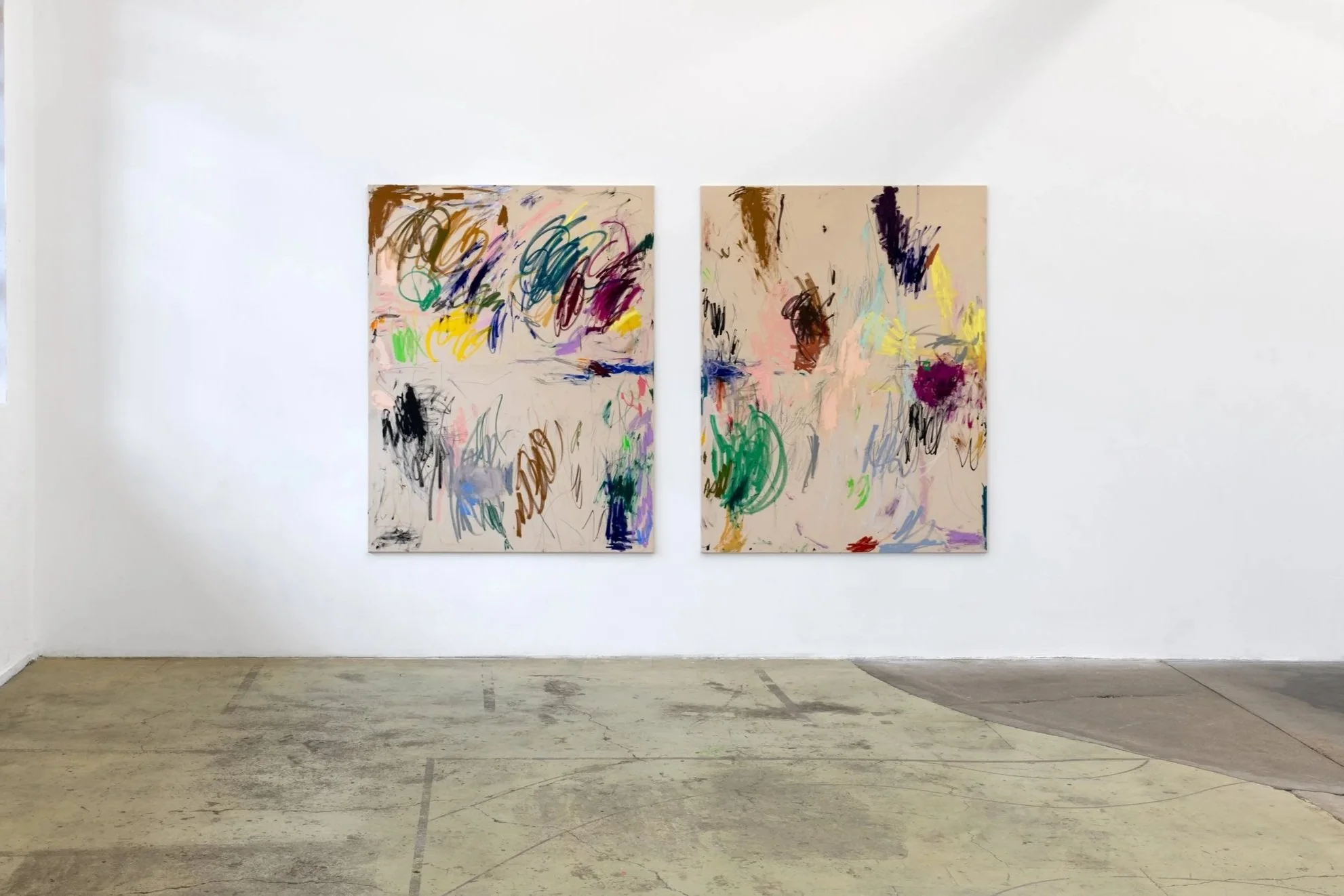
Stories crave beginnings, middles, and ends. Paintings resist such structures. They speak in fragments, ruptures, absences, and disjunctions. The group exhibition A Twist in the Tale brings together eight artists – Okka-Esther Hungerbühler, Kallirroi Ioannidou, Aneta Kajzer, Tim Leimbach, Tom Król, Linou Meyer, Solveig Schmid, and Marta Vovk – who approach painting not as representation, but as process, as event, as space. Here, storytelling drifts in gestures rather than sequences. A misplaced colour, a dissolving figure, a shattering form, a persistence of line — these are not mere details but bold interventions. The works do not unfold in the linear fashion that narrative typically requires. Instead, they remain suspended in a state of tension, where meaning teeters on the threshold. The paintings themselves hover between abstraction and figuration, the forms between presence and absence, the gestures between control and surrender, and the space between surface and depth. In this delicate interplay, paint becomes both witness and testament to alteration. Through its layers and traces, it reveals the ongoing process of transformation.
View More
REVERIES OF A SOLITARY MUSE
Group Exhibition
Haverkampf Leistenschneider, Berlin
2025
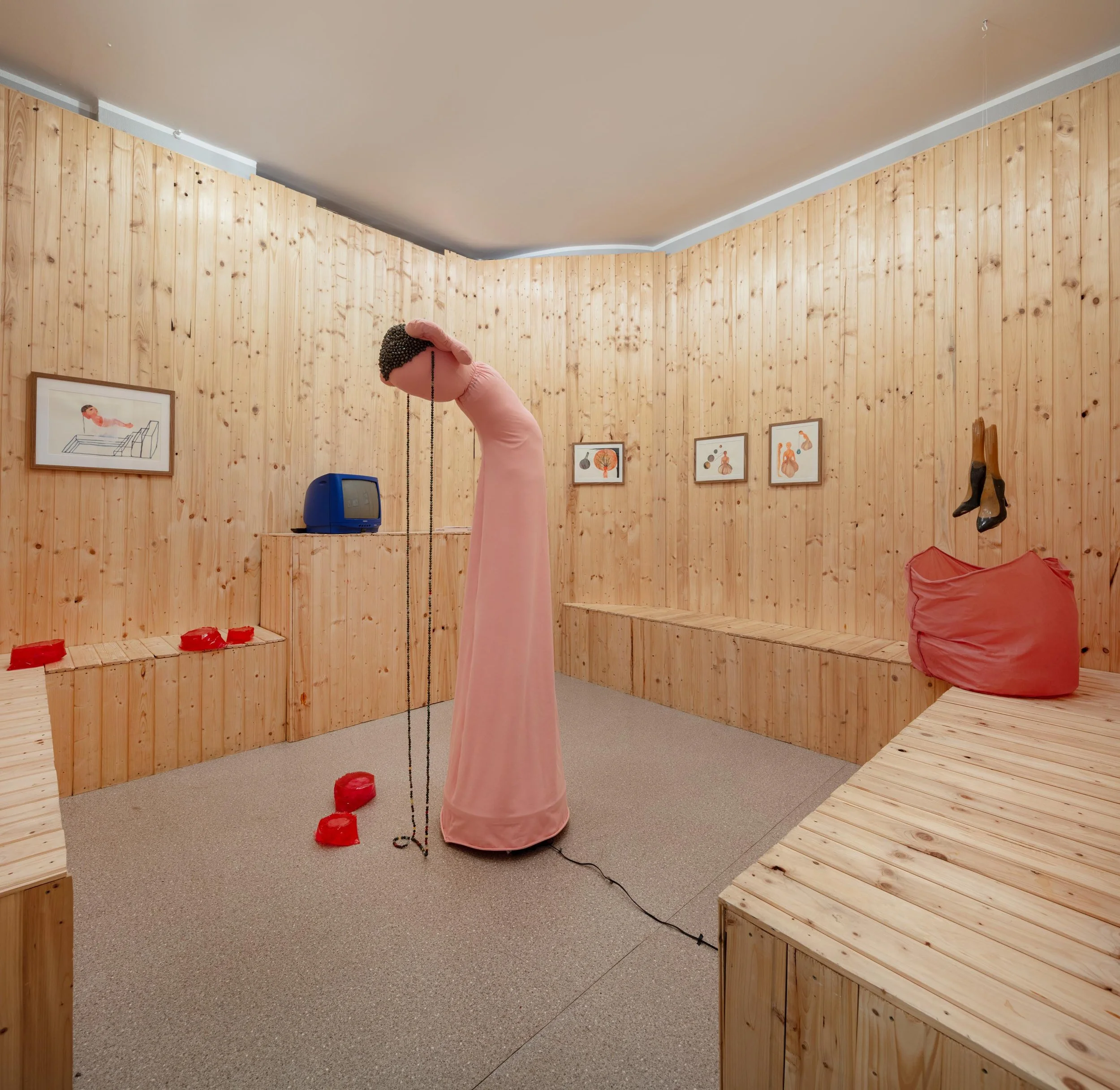
In Greek mythology, the Muses were thought to speak in whispers, inspiring those they blessed with their gifts. In some accounts, these whispers were carried on the wind, often from Mount Helicon, the sacred mountain where the nine Muses were said to reside. As divine patrons of the arts, each Muse presided over a distinct domain of knowledge—spanning poetry, dance, music, history, and astronomy—collectively embodying the vast spectrum of human inspiration, guiding artists, poets, and musicians as they retreated into the depths of thought. This idea of whispers has transcended time, enduring as a metaphor for the muse’s mysterious aura, a source of inspiration and personal enlightenment. Building on this notion, the exhibition reveries of a solitary muse brings together the work of nine women artists: Nadja Abt, Annabelle Agbo Godeau, Solweig de Barry, Isabella Fürnkäs, Suah Im, Alex Müller, Eglė Otto, Sophia Süßmilch, and Sophia Tabatadze. Spanning a wide range of mediums, their works offer multifaceted perspectives on the muse, unfolding a narrative imbued with a sense of dream, poetry, social critique and humour.
View More
CHANGE IN SUSPENSE
Hannah Hallermann
Die Möglichkeit einer Insel, Berlin
2024
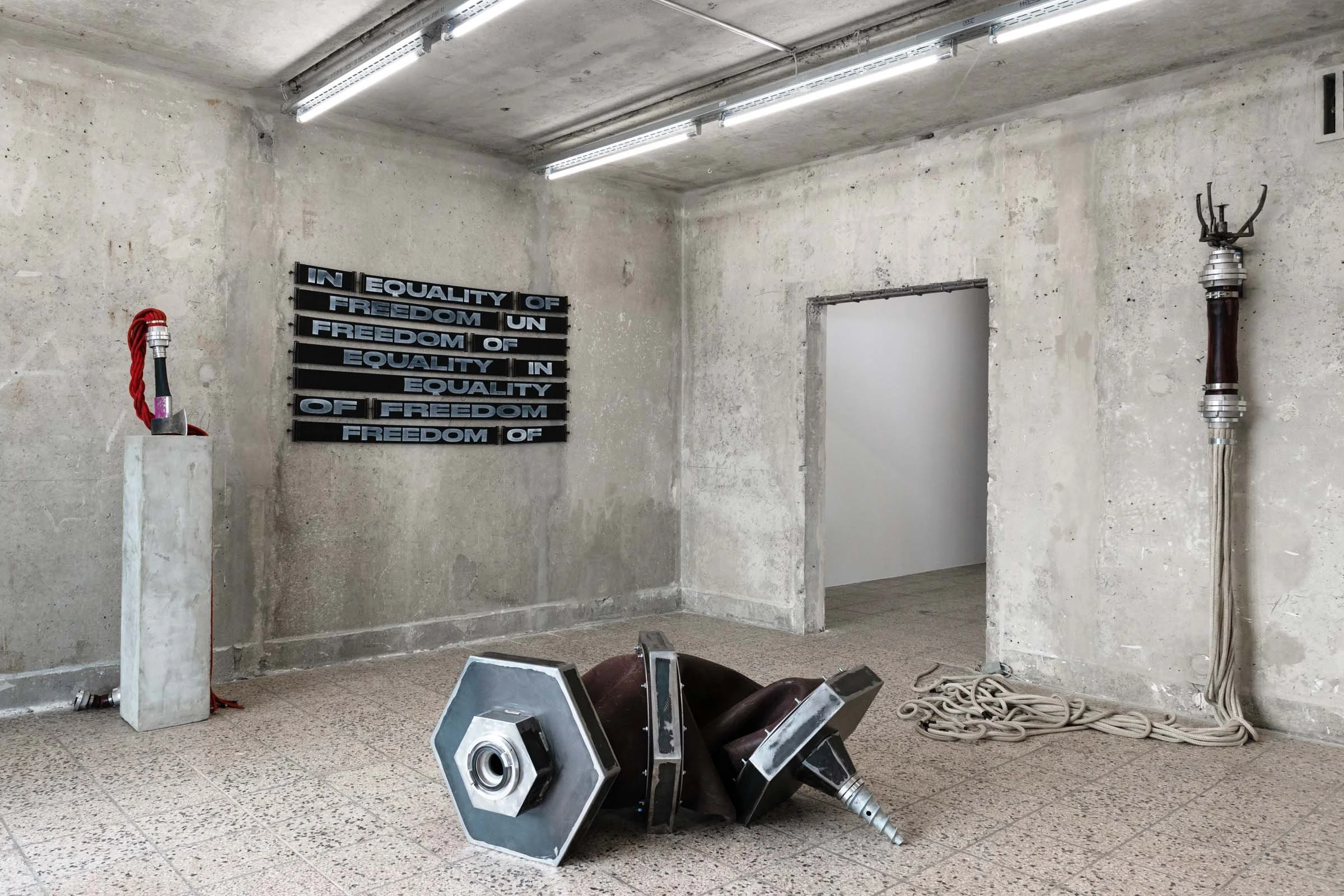
Life consists of conflicting forces that ideally hold each other in a creative tension but sometimes also tear relentlessly at each other. Tension has the potential to promote transformation and also implies the danger of stagnation or rupture. Berlin artist Hannah Hallermann has found a sculptural language for these dynamics, which can be applied to materials as well as to socio-political developments. The exhibition in the Berlin project space Die Möglichkeit einer Insel shows a series of fictional tools that express the need to endure contradictions, to move between different frames of reference and to develop some kind of ambivalence competence. The sculptures are in a dialogue with wall works, which translate the tension into text form. “I feel challenged to show different perspectives and to question how elements from different systems can merge. This is usually followed by a call to help shape things.”, says Hannah Hallermann. In the exhibition CHANGE IN SUSPENSE, objects remain in intermediate states, which deal with flexibility, but also with coercion and violence.
View More

THE POET’S FOLLY AND THE SOVEREIGN’S HAND
Group Exhibition
Wehrmuehle, Biesenthal
2023
Folly has long fascinated as a subject. The fool has evolved as a metaphor conveying the dichotomy between insanity and common sense. While the fool may lack reason, it possesses hidden or prophetic wisdom that is unattainable to the sane. Its most prominent representation, perhaps, is that of a ship with a dysfunctional crew aimlessly crossing the ocean. The allegory of the ship of fools can be traced back to Plato's Republic, and by the sixteenth century, penetrated Western literature and visual arts, with notable works including Sebastian Brant's Das Narrenschiff (Ship of Fools), Hieronymus Bosch's The Cure of Folly, Erasmus of Rotterdam's In Praise of Folly, and more recently, Michel Foucault's Madness and Civilization, which has revived critical attention to this enduring theme. The term ‘folly’ originates from the French word ‘folie’, which can refer to ‘madness’, ‘lack of good sense’, or ‘false belief’, but can also connote ‘delight’. Over time and across different cultural contexts, the meaning of folly has evolved, with interpretations often lying in the eye of the beholder.
View More

FALTVOGEL
Sebastian Lettner
Eberswalderstr. 22, Berlin
2022
In his exhibition FALTVOGEL Sebastian Lettner portrays ‘the art of folding and unfolding’ in a range of works meandering on the border of abstraction and figuration. Including a large-scale 3 by 4 metres diptych, a wall composition of found objects, large plant drawings and smaller textile works, the presentation evokes at times dynamic, at others more silent echos of nature – a recurrent theme in Lettner’s work. Faltfogel, ‘folded bird’ – title of the exhibition and recently published poetry book – refers to Lettner’s practice of bringing together different mediums like painting, drawing, installation and writing. Like in his poetry, where disparate thoughts, concepts and words create new meanings by overlapping or merging them, in the works on view Lettner generates new perspectives by superimposing gestures, blending textures or folding materials. Working with found material, building pictures out of leftovers, is an important part of that procedure.
View More

PORTAL
Bastian Gehbauer
Chaussee 36, Berlin
2021
A meditation on what abstraction within the photographic medium can be today, is a constant in Bastian Gehbauer’s practice. His photographs, which he often refers to as “mental spaces”, suggest rather than disclose, imbuing seemingly ordered, vacant or static scenes with a sense of enigma and lyric sensibility. His pictures appear as spontaneous, everyday impressions, yet are meticulously thought-out mise-en-scènes of light and space, which aspire to question what’s beyond the explicitly shown. As observed in his exhibition PORTAL featuring an eponymous body of work of eleven black-and-white photographs, Bastian Gehbauer counterbalances his often-rigorous handling of composition and light with a cinematographic quality which veils the images in a mood of secrecy. A continuation of his visual language, Gehbauer’s ‘Portal’ series (2020-2021) draws on his interrogation of abstraction and representation, principles of architecture, and notions of the sublime.
View More

IN ORBIT
Anneke Kleimann
Reinhardtstraße 19, Berlin
2021
A symbiosis of abstraction and figuration, Anneke Kleimann’s exhibition IN ORBIT focuses on the artist’s ongoing experimentation with materials and the physical transformation of matter, while probing scientific maxims of time and space. Drawing from the visual languages of minimalism and physics, the exhibition features five sculptural works in a variety of materials including acrylic glass, papier-mâché and sugar, each exemplifying Kleimann’s adept manipulation and reinterpretation of materials. At the centre of the presentation, Kleimann’s installation ‘Concrete Speculations’ (2019-2020) represents a constellation of seven heterogenous sculptures in papier-mâché, which fuse geometrical, organic, and elliptical elements. The “orbital” arrangement of the sculptures, their surfaces’ grainy texture, and the metaphorical absence of colour ("grey matter") allude to Kleimann’s exploration of a multiverse – a widespread hypothesis on the existence of infinite parallel universes. With each sculpture representing an alternate universe, Kleimann delves into metaphysical questions about the perpetuate expansion of time and space, yet only to distract the viewer from a visually playful choreography of abstract forms.
View More