
SUBSTRAT SUPPORTS ARTISTS THROUGH ONE-OFF PROJECTS AND LONG-TERM COLLABORATIONS.
KATJA AUFLEGER
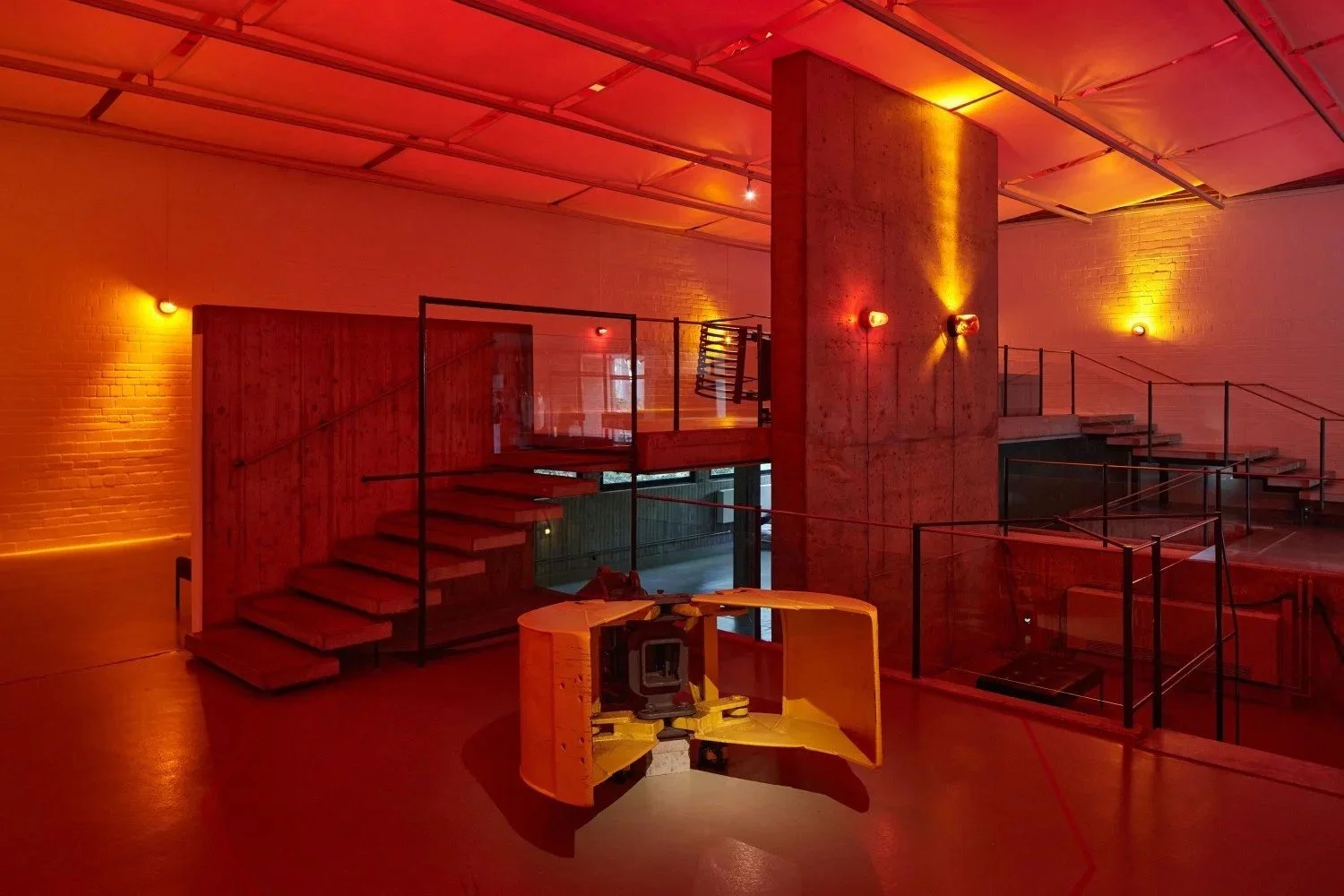
Katja Aufleger is a Berlin-based artist whose sculptures, installations, and video works operate as metaphors—analogies through which she addresses a wide range of interlinked subjects, from intimate personal relations to cosmic bodies, from social critique to the latent potential of disaster. At the core of her artistic practice lies an ongoing inquiry into power relations, understood as forces that are both creative and destructive. Encountering her works is a double-edged experience: a visually compelling form may directly or indirectly allude to alternative potentialities—an imminent explosion, a chemical reaction, the visualisation of sound, or other unseen processes. Often, this anticipatory tension is reinforced through language, as titles hint at what might occur beyond the visible. In this way, her works unfold beyond what is physically present, becoming multilayered experiences in which the viewer’s consciousness and subconsciousness actively participate in the imaginative completion of the piece. Subtle humor frequently runs through these investigations, sharpening their critical edge. Katja Aufleger has exhibited, among others, at the Ruhrtriennale in Bochum, the Museum Tinguely in Basel, Selebe Yoon in Dakar, the Beijing Biennale in China, the Hamburger Bahnhof – Nationalgalerie der Gegenwart in Berlin, and the Amant in New York.
Website
HEIKE GALLMEIER
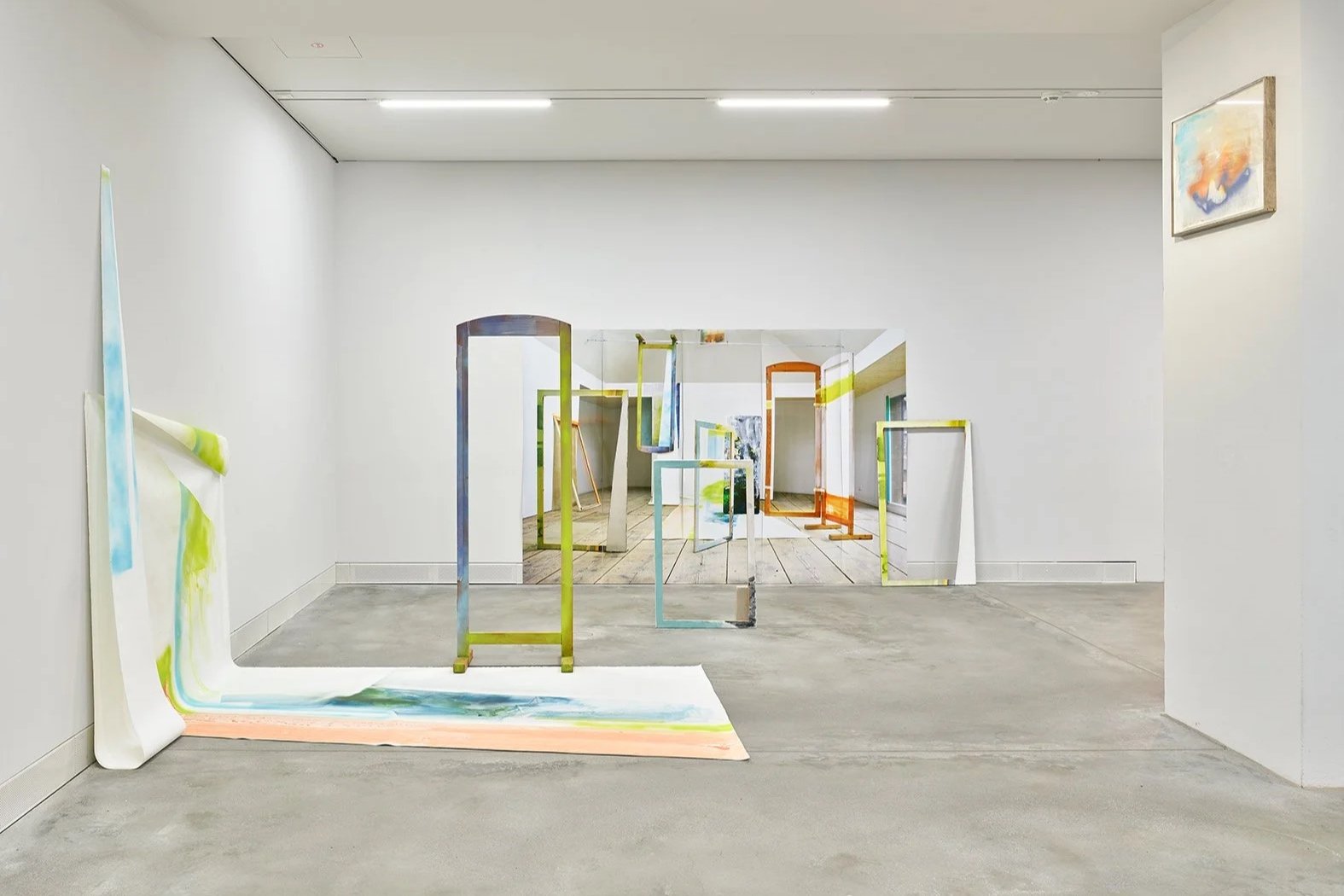
Heike Gallmeier uses space as a painting ground. She combines elements of sculpture, painting and photography to form multimedia installations. In various groups of works and with a variety of media, she examines questions of perception, as well as notions relating to the nomadic, the fragment. Her installations and photographs not only thematize their being constructed; rather, they are also always poised on the precarious line between consistency and contingency. Depending on the viewer's perspective, compositions dissolve and reform. This examination of continuous change also leads her on journeys during which she travels and works in the mobile art space, a van converted into a mobile white cube. She was a scholarship holder at the German Center for Venetian Studies and has received funding from the Konrad Adenauer Foundation, the Kunstfonds Foundation and the Kunststiftung NRW, among others. Since 2021, she has been a Professor of Painting at Pforzheim University. Her works have been exhibited, among others, at the Frankfurter Kunstverein, the KW Institute for Contemporary Art Berlin, the Ca Rezzonico Museum in Venice and the Wallraf-Richartz Museum in Cologne.
Website
BASTIAN GEHBAUER
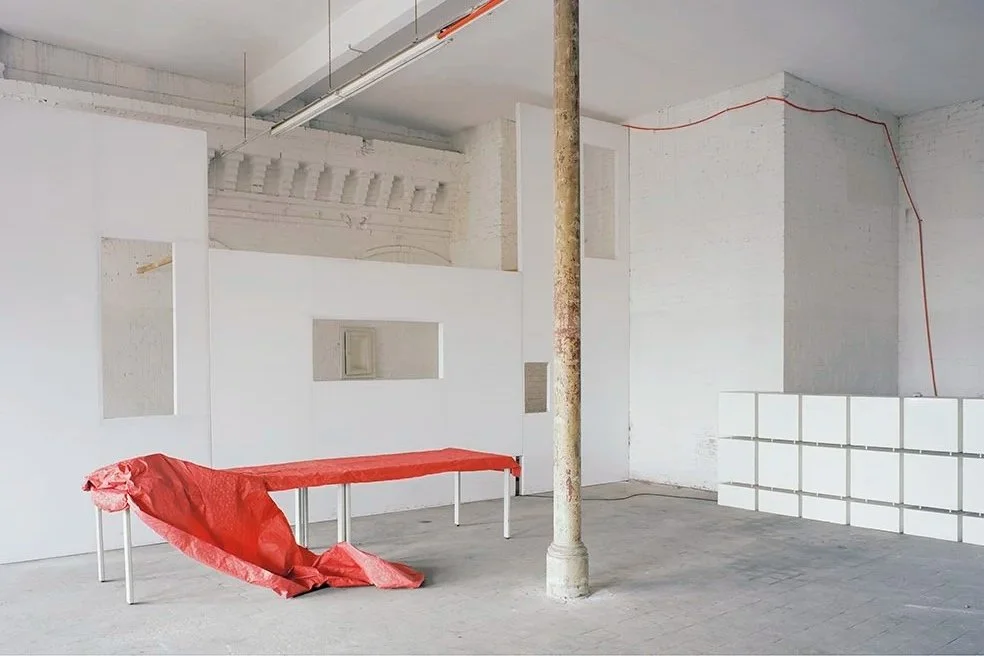
Bastian Gehbauer’s work is a continued meditation on the poetics of entropy and the allegories of loss. (Kate Brown) A sensitive observation of buildings, architecture, spaces and things. He focuses on the emotional quality of these places or objects, their historical components and the processes of change to which they are subjected. Photography serves him as the primary medium of his artistic expression, complemented by installation. His work mainly moves between three areas: producing his own photographs, using archival material and using AI in an experimental way. Bastian studied at at Ostkreuzschule für Fotografie in Berlin and the State Academy of Fine Arts in Stuttgart (ABK) with Ricarda Roggan. He graduated from the Academy of Fine Arts in Leipzig (HGB), where he studied photography in the class of Heidi Specker. His works were shown in solo and group shows at Kunsthalle Darmstadt, HOTO Gallery, Stroboskop Art Space Warsaw, Berghain Berlin, Die Möglichkeit einer Insel Berlin, Folkwang Museum Essen, Photobastei Zürich, SAP Kunsthalle Walldorf etc.
Website
HAHA
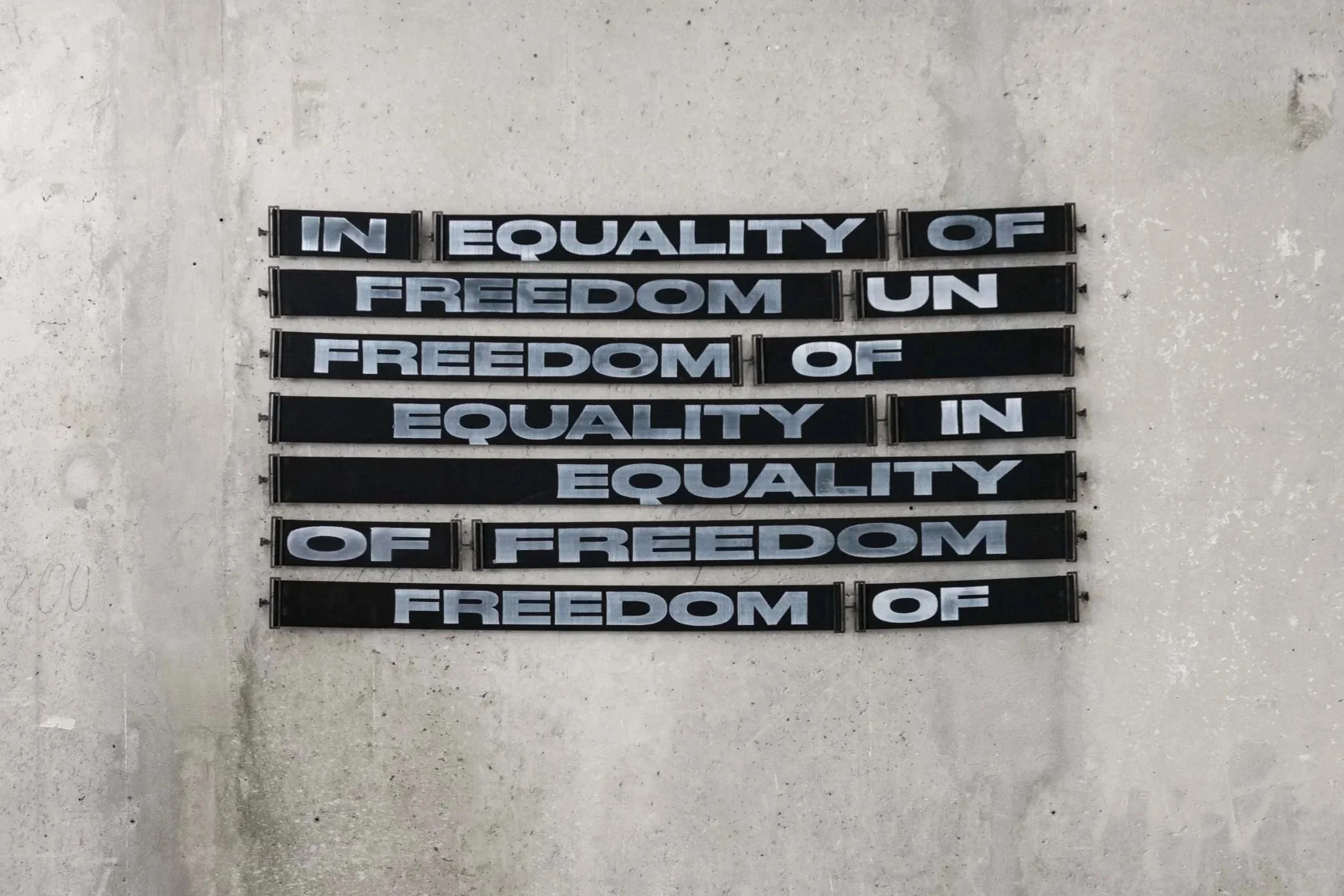
In her multidisciplinary work, Berlin-based artist Hannah Hallermann links clear, essential forms to complex social issues. Her sculptures that she builds in her own studio evoke an intense relation between body and objects, as well as powerful dynamics between the often disparate materials. Myths and symbols seem to drift through time and transfigure into contemporary form and relevance.
Hannah's sculptures act as tools for social transformation – embracing conflict and the paradox but refusing stagnation. The works may challenge the viewer’s imagination of how to relate to and how to use these tools, but also spark conversation about a reality of unequal opportunities. Hannah’s art supports ambiguity and a freer, less restricted kind of social interaction: more confusing, more chaotic, less reasonable, more dirty, more open, more vulnerable.
Her work is featured in the major presentation “Still Alive” at Albertinum, Dresden. She is part of the Sammlung Hoffmann and the SKD (Staatliche Kunstsammlung Dresden). Hallermann has recently been awarded with the Pollock Krasner Foundation Grant, Stiftung Kunstfonds and the Sonderstipendium des Landes Berlin.
Website
ALEXANDER KLAUBERT
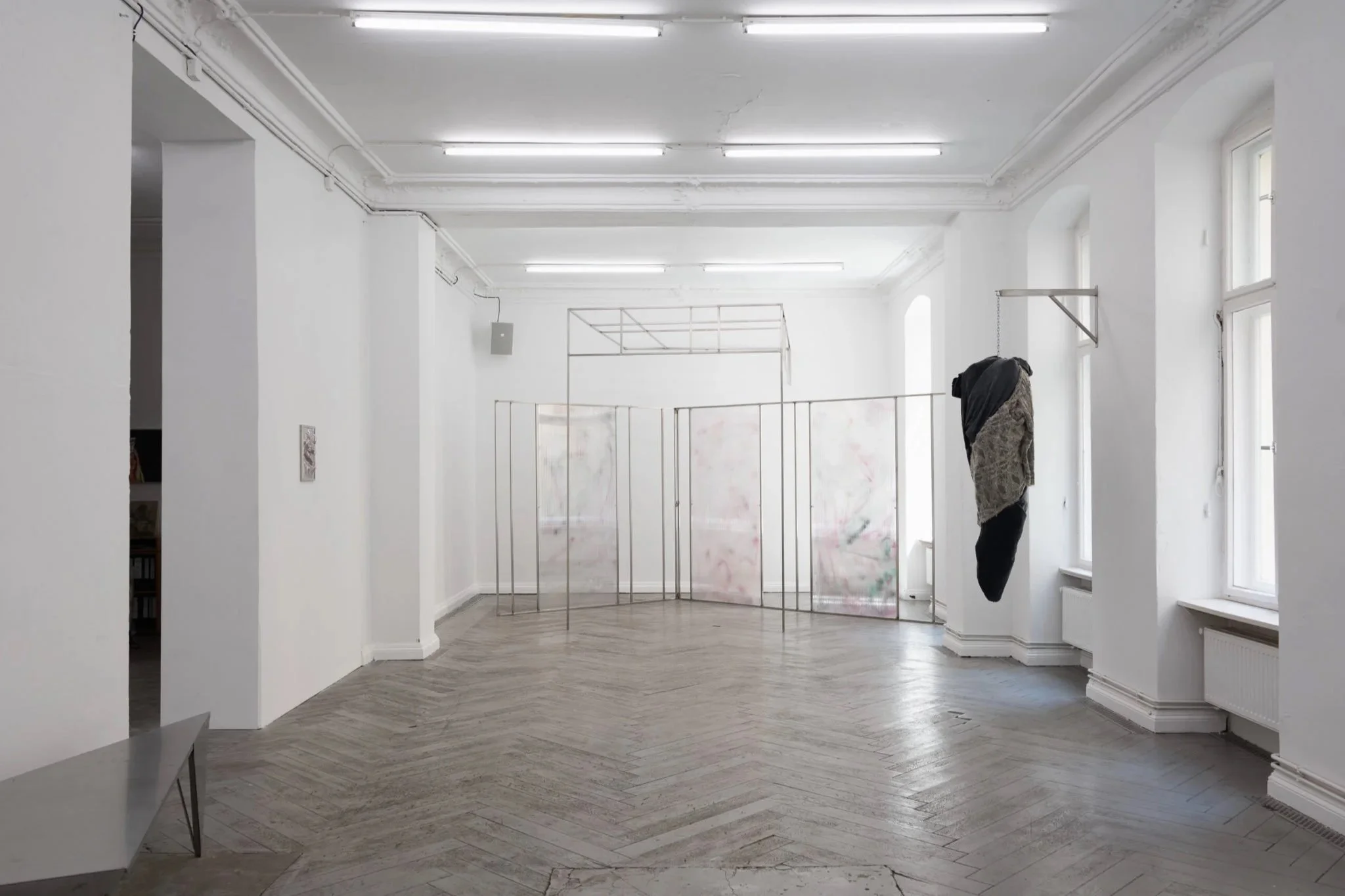
Alexander Klaubert is a transdisciplinary artist based in Berlin, working at the intersection of sculpture, installation, performance, contemporary dance, sound and curation. A recurring theme in his work is the exploration of belonging, isolation, and the interaction between inner and outer worlds. By merging sound, movement, and visual elements, he challenges established communication forms and explores alternative social interactions. Autobiographical references serve as a starting point for broader societal inquiries. In 2024, Klaubert completed his Meisterschüler studies in performative arts under Isabel Lewis at the Academy of Fine Arts Leipzig (HGB), following earlier studies in Fine Arts with Tina Bara, Joachim Blank, and Peggy Buth. Collaboration is key to his practice. He co-founded the artist collective otc in 2018, the art platform Tired Mass in 2020, and the performative platform Shifting Temple in 2024 with Colette Patterson. His work has been shown at ASPN Gallery, Leipzig; Wilhelm Hallen, Berlin; Eigen+Art Lab, Berlin; Eigen+Art Galerie, Leipzig; Marburger Kunstverein; ZAK – Center for Contemporary Art, Berlin; and Rencontres d’Arles, among others.
Website
VERA KOX
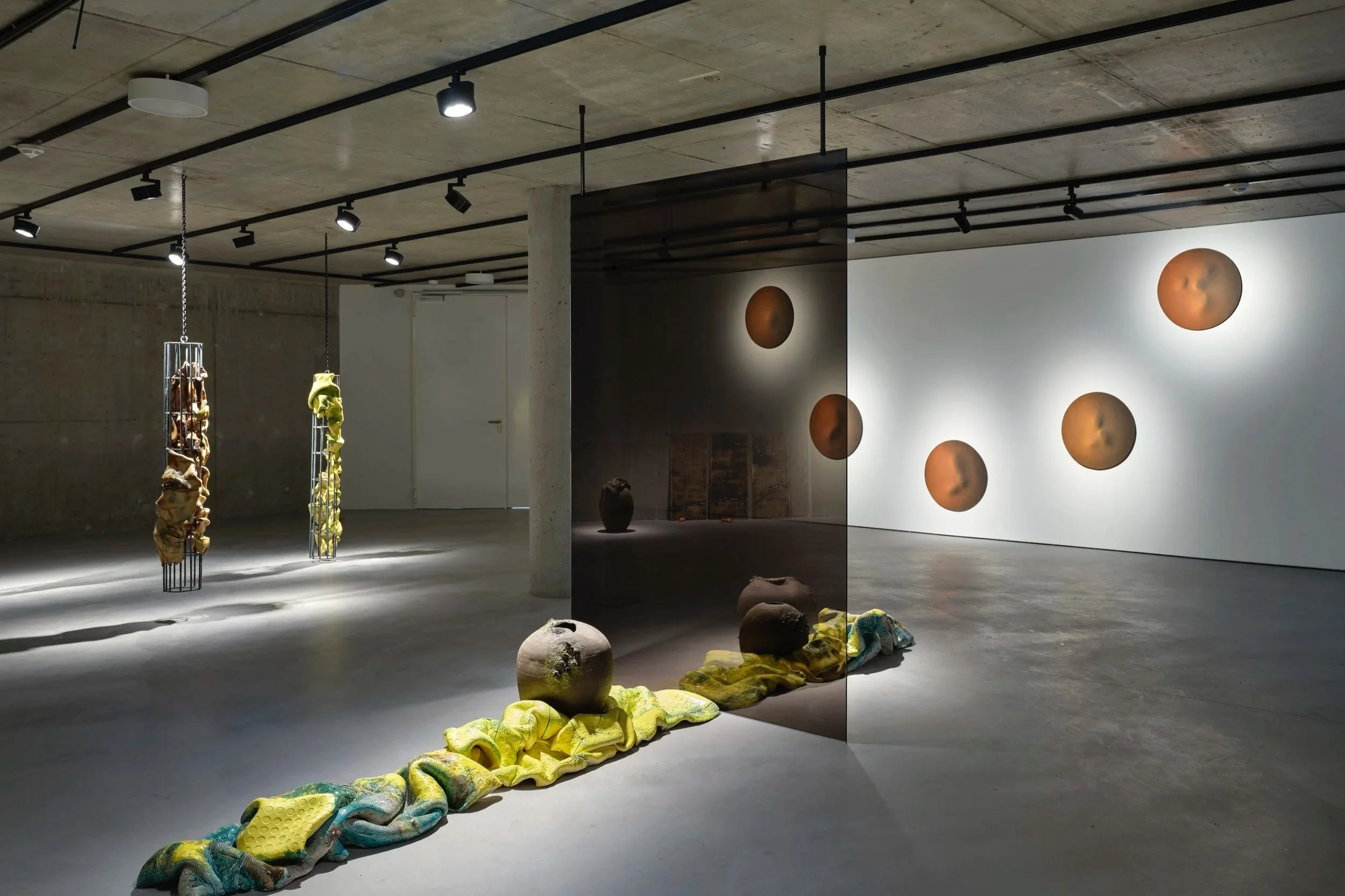
Vera Kox reflects on the human-made impact on post-industrial ecologies and their tangible traces. Her artistic practice acknowledges the inherent agency of the material itself, with an emphasis on the ceramic medium. Challenging the notion of classical sculpture, the traditional idea of a monument gives way to seemingly soft materials, horizontal compositions, and transformative natural environments. Vera's work envisions a transition from a human-centered perspective to a multi-species worldview. Through rigorous experimentation to alter, modify, stretch, and compress the significance of matter, she reveals contemporary fossils of our modern, materialistic reality.
Website
JOHANNES KREIDLER
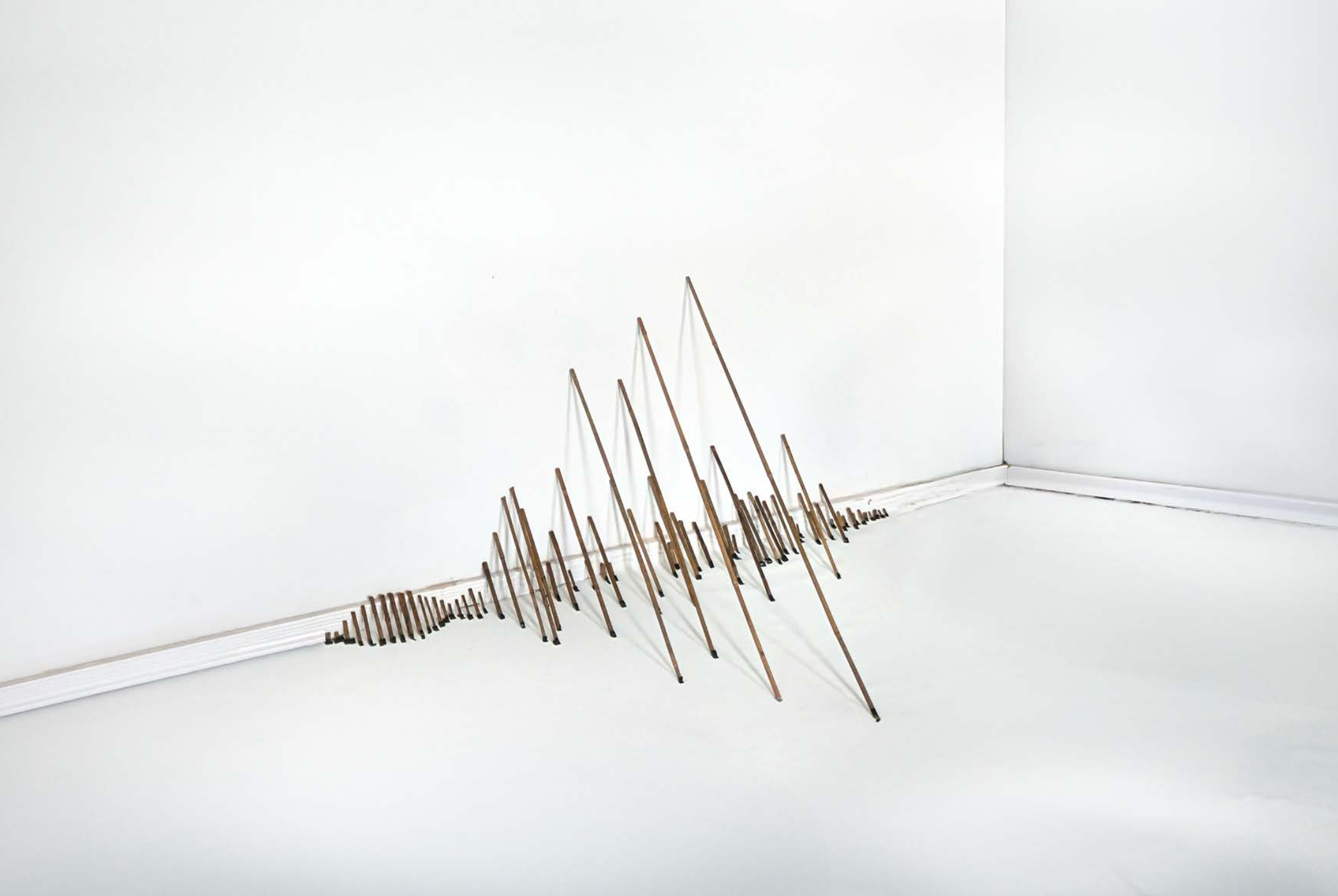
Johannes Kreidler’s work spans sound, image, sculpture, video, performance, and installation, and is informed by his background in music theory, composition, and electronic music, studied in Freiburg and The Hague. His sonic and sculptural installations function as visual synthesizers, expanding the richness of sound waves, their formal possibilities, and their symbolic nature. Sound appears in his work as a process removed from time, yet also as a distinct aesthetic structure. Through elaborate processes—speaking, singing, playing, and electronically transforming sounds, as well as drawing from global sound archives—he develops a complex sonic palette. Through the interplay of studio recording, digital composition, and material transformation, his practice translates acoustic phenomena into visual and spatial forms, oscillating between auditory information and visual experience. Kreidler lives and works between Berlin and Basel and has been Professor of Composition at the Hochschule für Musik Basel since 2019.
Website
JUNG A LEE
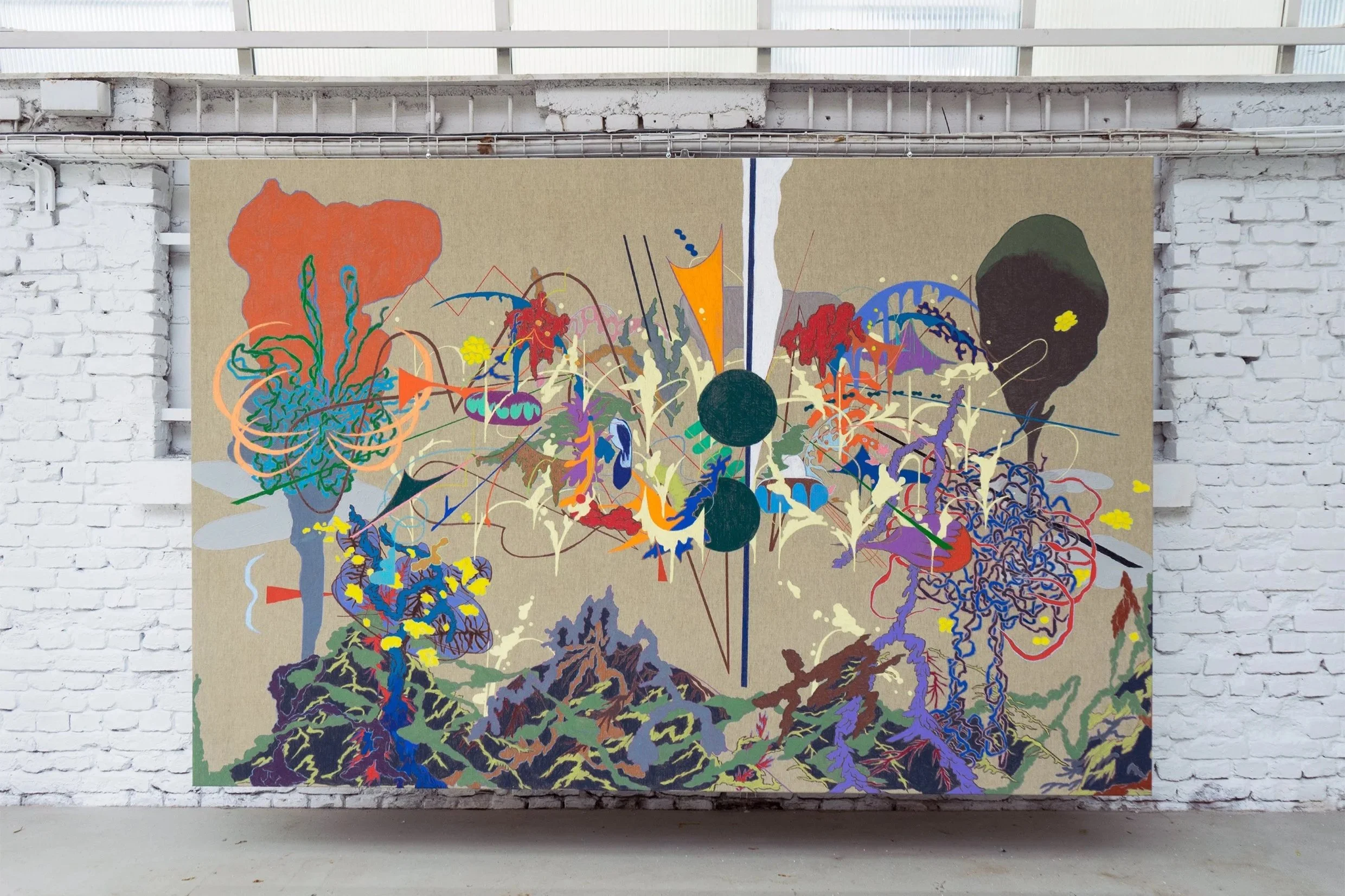
Jung A Lee’s artistic practice is characterised by an introspective exploration of the human inner life and its connection to the natural world. Weaving together Eastern and Western cultural foundations, her work combines symbols drawn from dreams, everyday life, and myth. Working primarily in painting as a medium of reflection and philosophical inquiry, she investigates unconscious states related to identity, vitality, and inner experience, seeking connections between self and world, inside and outside. Her works can be understood as inner landscapes—spaces in which psychological states take visual form. Influenced by her upbringing in a traditional Korean village shaped by generations of her family, Lee developed a close relationship with nature, which informs her practice and resonates in her visual language. Characteristic are flowing lines derived from organic forms such as roots, intestines, and currents, referencing the cyclical principles of life. Jung A Lee (b. Seoul, 1995) currently lives and works between Germany and South Korea. She graduated in Fine Art and Painting at Weißensee Kunsthochschule Berlin.
Website
SEBASTIAN LETTNER
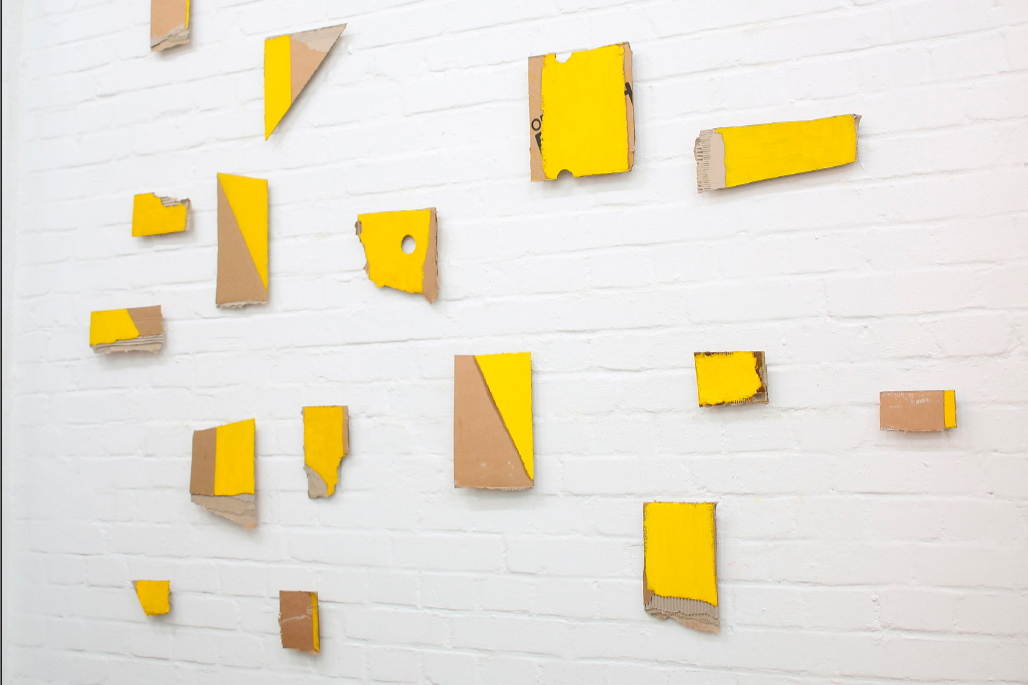
Sebastian Lettner is a Berlin based artist working primarily in the field of painting. His practice is a constant appropriation of reality, reflected in his minimalistic pictorial objects and paintings. The nature of perception, as a profoundly human concept, is the framework for his understanding of art, which favors the process and continuous movement. His painting conveys itself, as a gesture or trace in its haptic quality, as the surface of an image body, in its spatial perception as a place. „The desire to experience and capture human presence through painting, far removed from ironic distance, is the compass of my work. Truth is a nomadic state; only those who constantly question and reevaluate themselves and their convictions can approach it. The experience of reality leads to insight with every painting; every painting is a self-portrait. We should not despise reality, as we are in the process of losing it.
Website
JOSEPH MARR
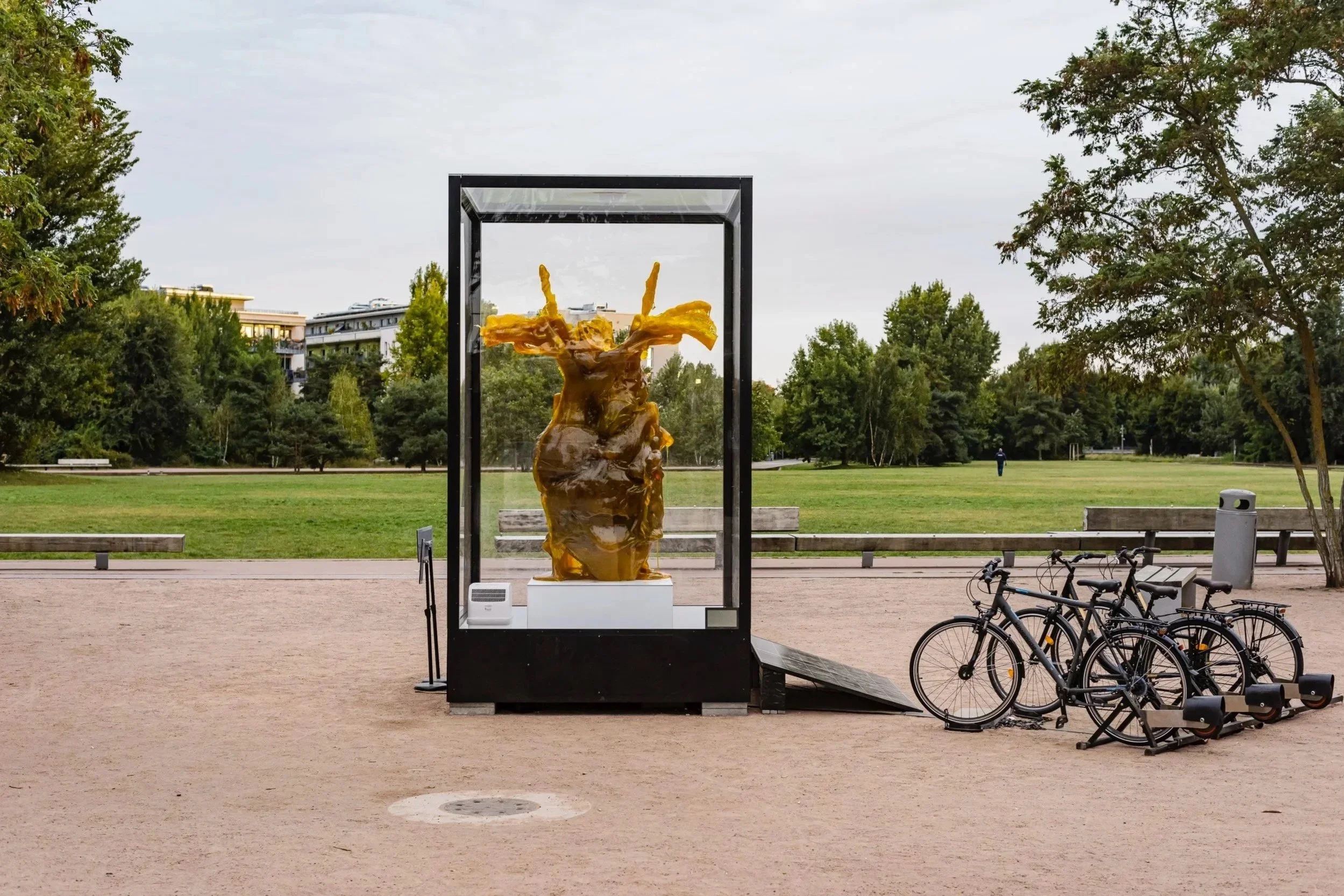
Joseph Marr’s practice spans sculpture, painting, video, and photography, forming a conceptually driven exploration of time, consciousness, and interpersonal experience. Whether working with sugar, resin, oil paint, 3D photography, or metal, Marr approaches each medium as a metaphorical vehicle for artistic expression. These materials carry deeply personal meanings while also resonating with broader, universal associations. Sugar, in particular, plays a central role in his work. Its global familiarity and omnipresence lead him to employ it as a sculptural material, inviting viewers to reconsider its symbolic and sensory dimensions. In his practice, sugar becomes a metaphor for desire and its pervasive influence on perception: when consciousness is saturated with longing, that which is desired metaphorically transforms into sugar. His Māori heritage continually informs both his life and artistic approach. Within Māori culture, traditions and rituals are upheld to sustain connections to nature, ancestors, and the spiritual realm. These cultural frameworks shape social relations, spiritual practices, and the treatment of natural resources, recurring as thematic undercurrents throughout his work.
Website

ALEX MÜLLER
Alex Müller’s artistic practice is defined by a continuous process of transformation. Her works often transform organic materials such as apples or blue poppies, as well as objects taken from everyday reality, into fantastic, paradoxical, and enigmatic arrangements. Objects, ideas, and images are reused, reshaped, and reinterpreted, generating new meanings and unexpected connections. Alongside autobiographical sources, the cultural memory of a media-shaped society plays a central role in the formation of these constellations. Her works often draw on television series from her childhood and youth, her admiration for filmmakers such as Peter Greenaway, as well as her fascination with mythological and astrological knowledge. At the same time, German history—particularly the division of Germany—and her family’s East–West constellation serve as important points of reference. Exploring both the passage of time and the timeless, Müller’s works oscillate between identification and mystery, between the construction of meaning and a certain hermeticism.
Website
SARINA PANAHIDEH
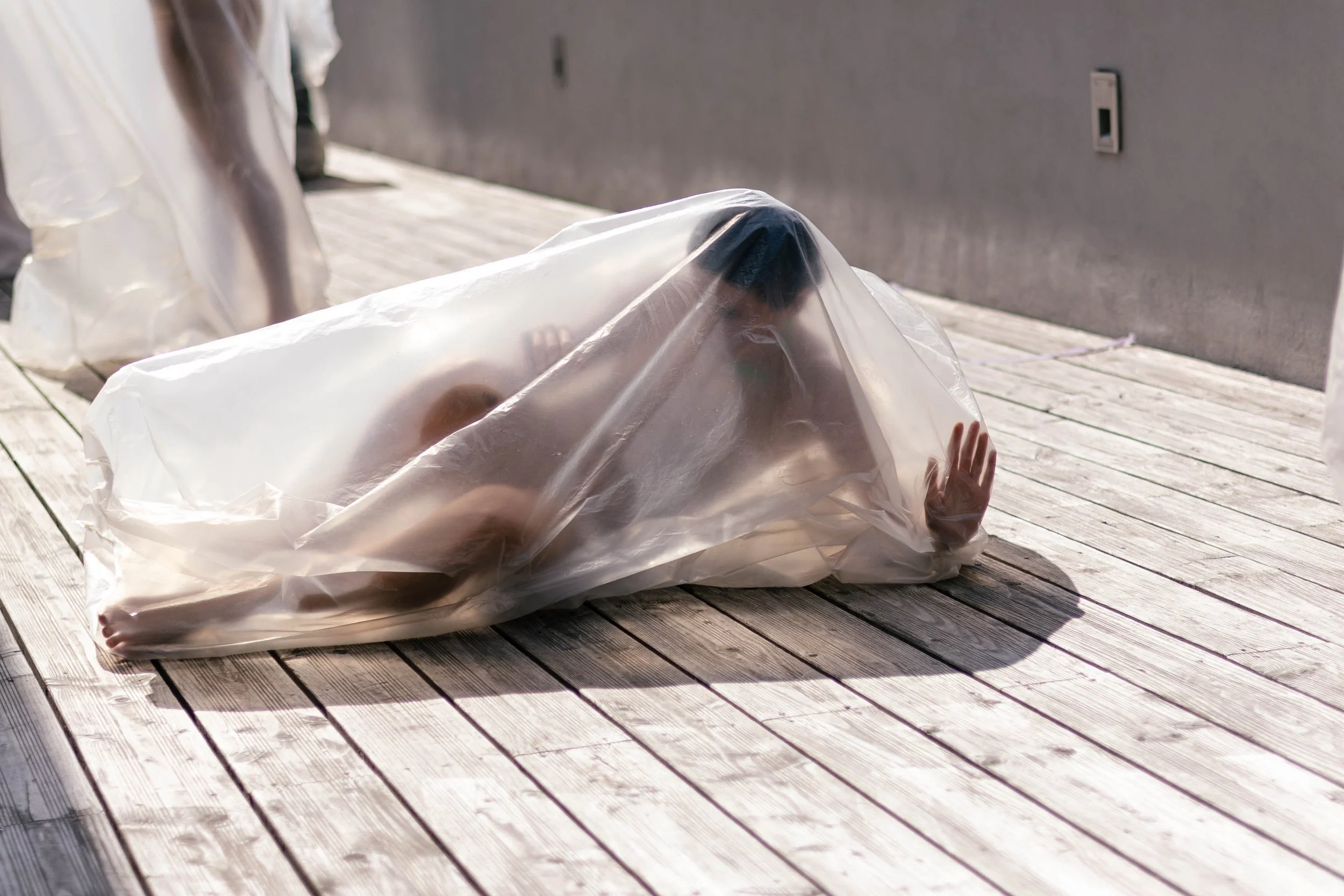
Sarina Panahideh is a Kurdish artist from Iran, now based in Berlin. Her work as a dancer, choreographer, and theater director delves into critical social issues, with a particular focus on the challenges faced by women and the pursuit of freedom in oppressive environments. Her evocative performances have garnered attention from international media, including BBC, ARTE, DW, and more. Despite the obstacles she has encountered due to the nature of her art, Sarina continues to use her work on global stages as a platform to raise awareness of human rights and social justice.
Yvonne Roeb
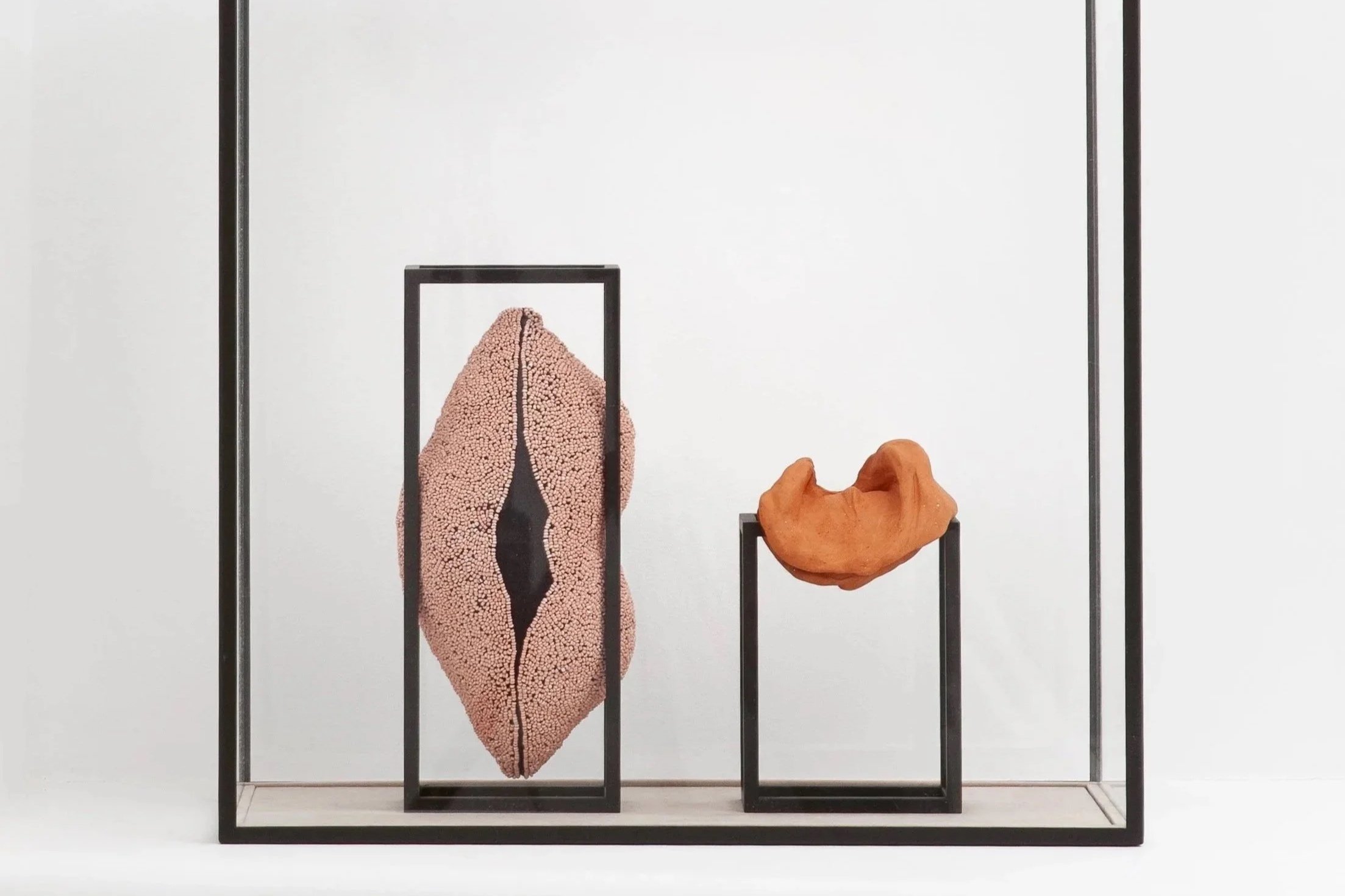
Yvonne Roeb is a visual artist based in Berlin and Paris. Her sculptural practice unfolds through hybrid forms that navigate the porous boundaries between nature, body, and imagination. Drawing on biological, psychological, and mythological narratives, her work explores states of vulnerability, transformation, and the unstable threshold between human and non-human worlds.
At the core of her practice is the human body as a psychological and symbolic terrain — a site where memory, perception, and projection converge. Oscillating between intimacy and estrangement, her works construct tactile, emotionally charged spaces that evoke both sensuality and unease.
Roeb has exhibited internationally across Europe and the United States. Her works are included in public collections such as the Art Collection of the Federal Republic of Germany, Lehmbruck Museum, Kunsthalle Emden, Marta Herford or the National Museum – Four Domes Pavilion in Wrocław.
NADINE SCHEMMANN
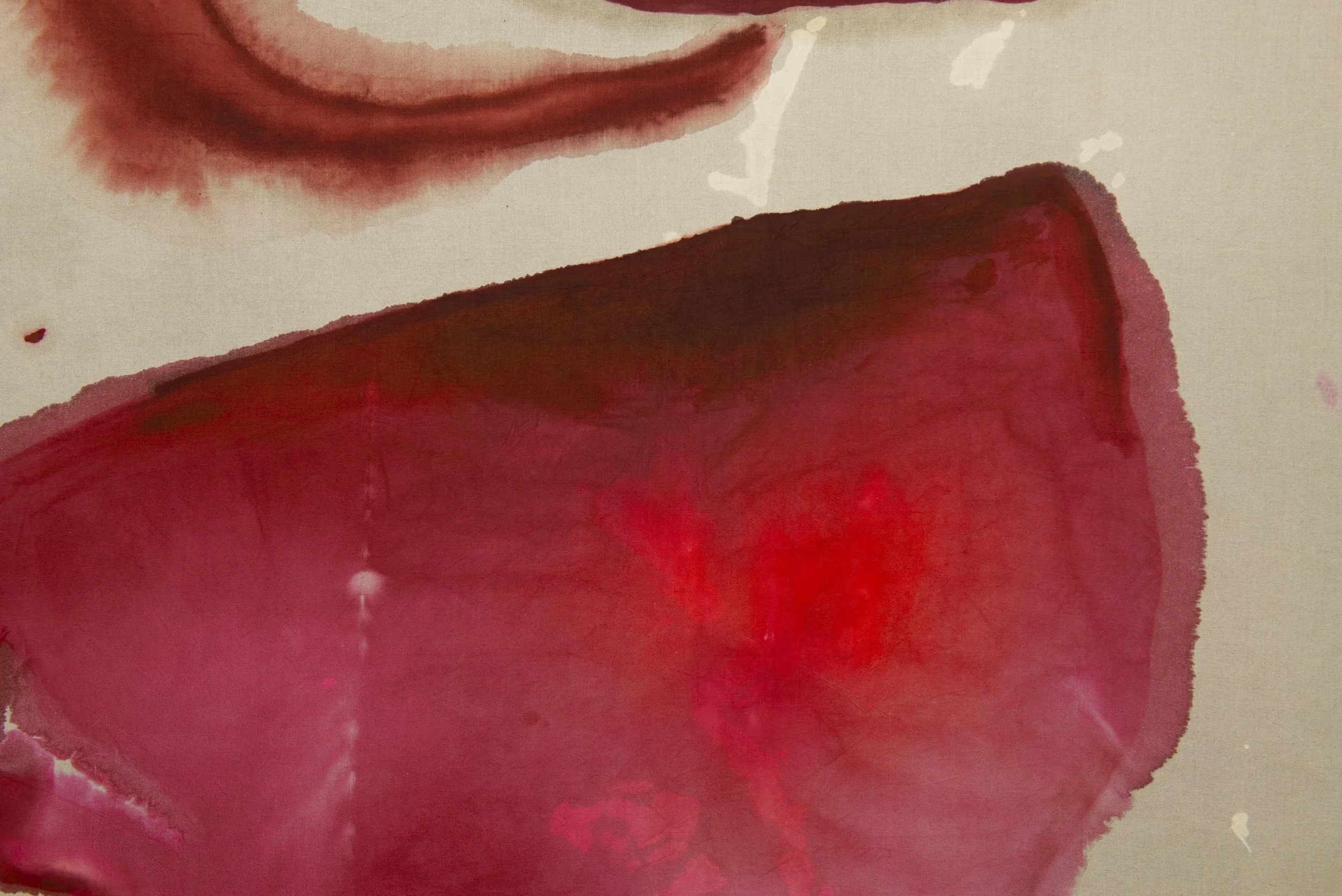
Nadine Schemmann‘s works are a representation of encounters, conversations and lived moments. In her sculptures and pictures, she assembles the components, which constitute an encounter: the sounds, feelings and colors. In the actual painting process, Schemmann enters into a dialogue characterised by freedom and attention, in which the colors and materiality of the painting support express themselves together with her. She achieves the fascinating depth of her color spaces through the use of chlorine bleach. Linen is Nadine Schemmann's preferred painting support. She allows threads or seams to protrude, creating islands of color. She also draws attention to the structure of the fabric by distorting it slightly. The artist sometimes frees her painting supports completely from the stretching frame so that they flow down the walls or condense into sculptures hanging freely in the room.
SOLVEIG SCHMID
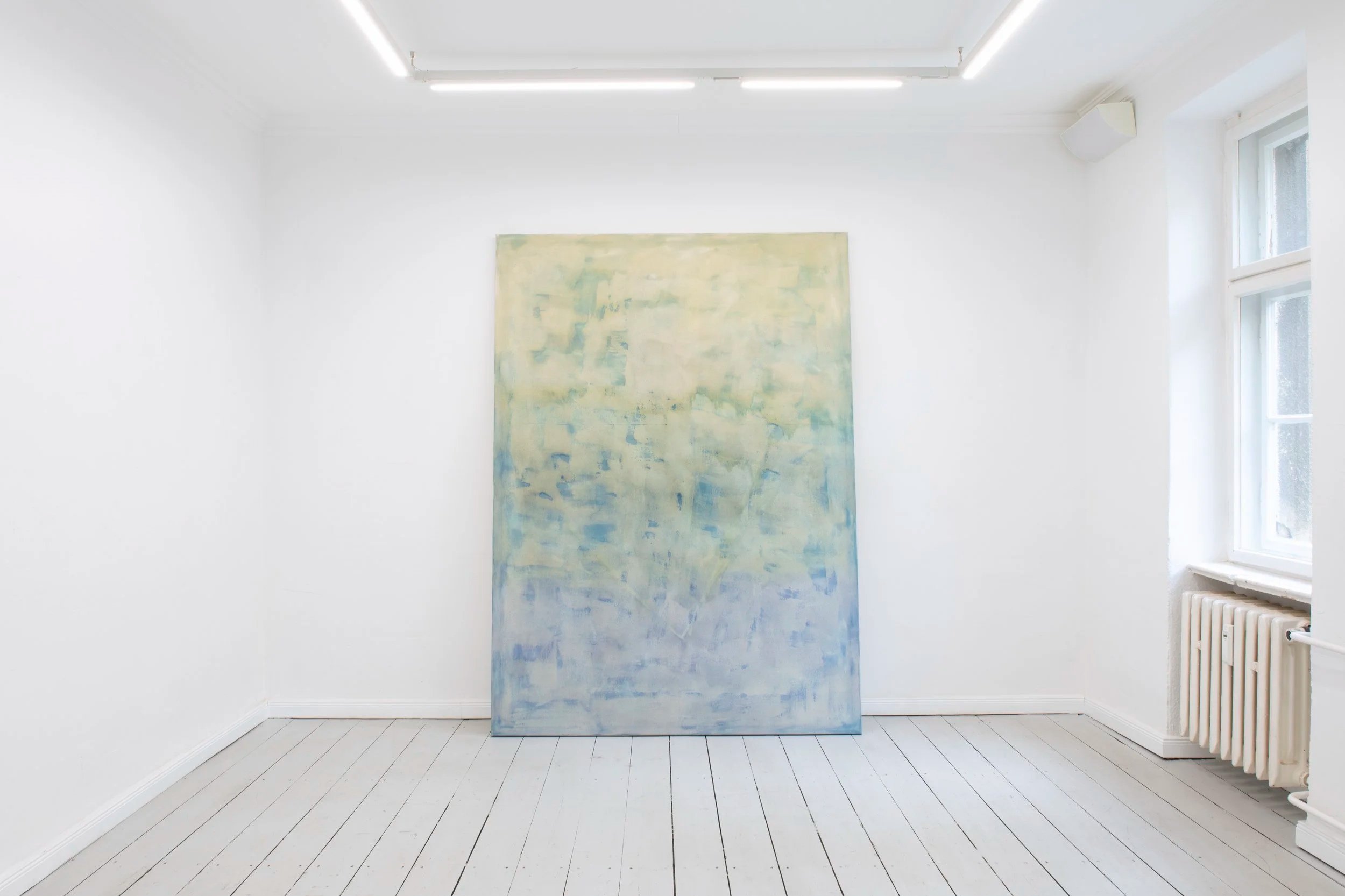
Solveig Schmid is a Berlin-based artist whose large-scale paintings oscillate between condensed fields of color and open pictorial structures, referencing natural phenomena not as motifs, but through an engagement with questions of temporality, movement, and transformation. Her direct, process-oriented approach to material produces a dynamic relationship of density and transparency, in which ground, glaze, and support operate simultaneously, intertwining surface and depth. The paintings evolve through performative processes in which resistance, chance, and control become equally productive, generating a field of tension. In dialectical relation to these are her paper works mounted on Alu-Dibond, in which gestural marks appear more isolated, examining ephemerality and the absence of language. In 2022, she became a Meisterschülerin at the Berlin University of the Arts in the classes of Robert Lucander and Valerie Favre, and has been teaching as a lecturer in Robert Lucander’s class at the Berlin University of the Arts (2024, 2026).
SOPHIA TABADATZE
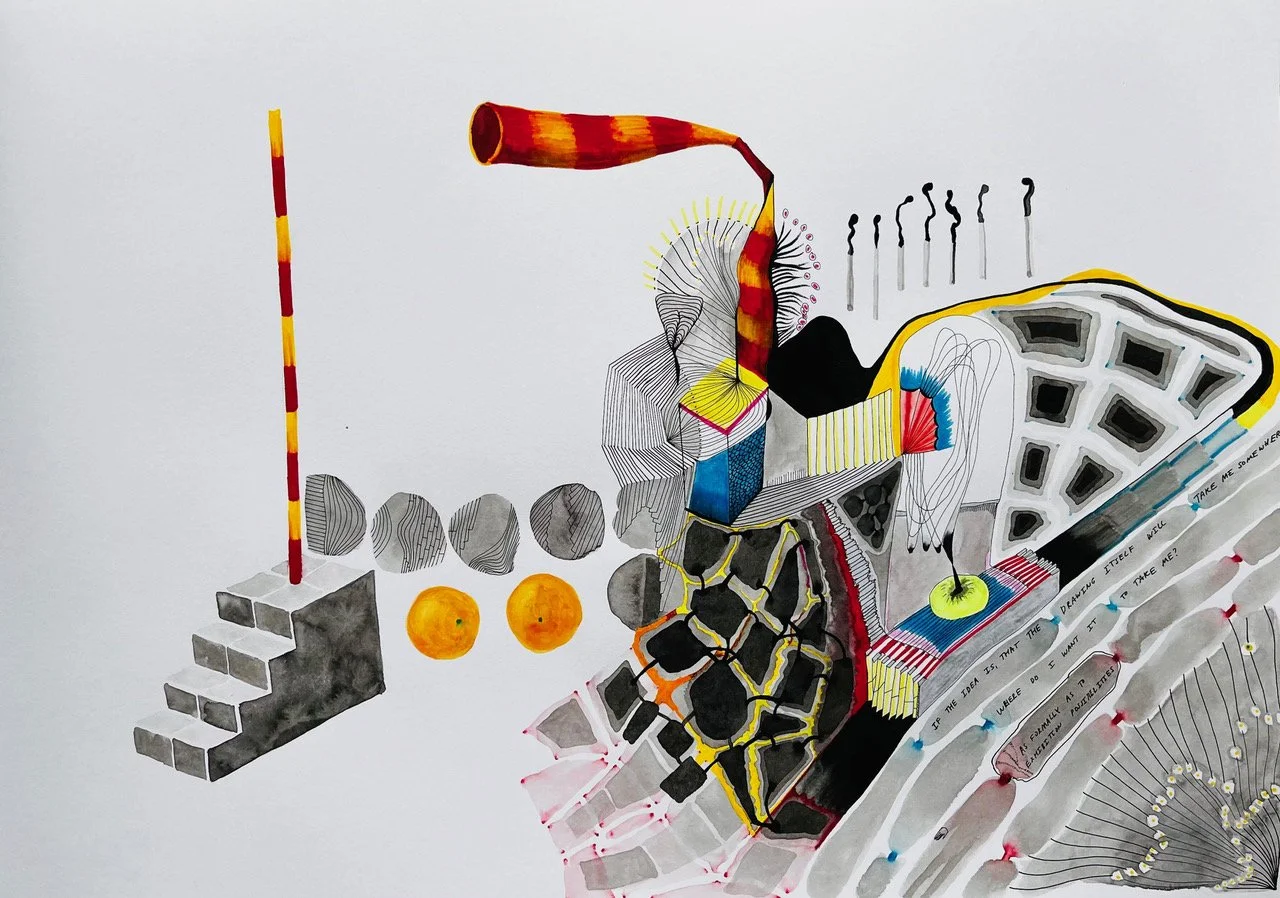
Sophia Tabatadze works across drawing, installation, video art, and performance. A central focus of her practice lies in exploring the tension between form and content, facade and interior, appearance and reality. Many of her works examine the "condition humaine" within local living environments and their global interconnectedness-an interest she developed during her studies at the Rietveld Academy in Amsterdam. Within this tramework, she investigates how political and social events reshape built environments and influence the lives of those who inhabit them. Her work frequently reflects on the transformations experienced by the people of her home country, Georgia, throughout its recent turbulent history. While often rooted in the Georgian context, her themes carry universal resonance and global relevance.
HALVEIG VILLAND
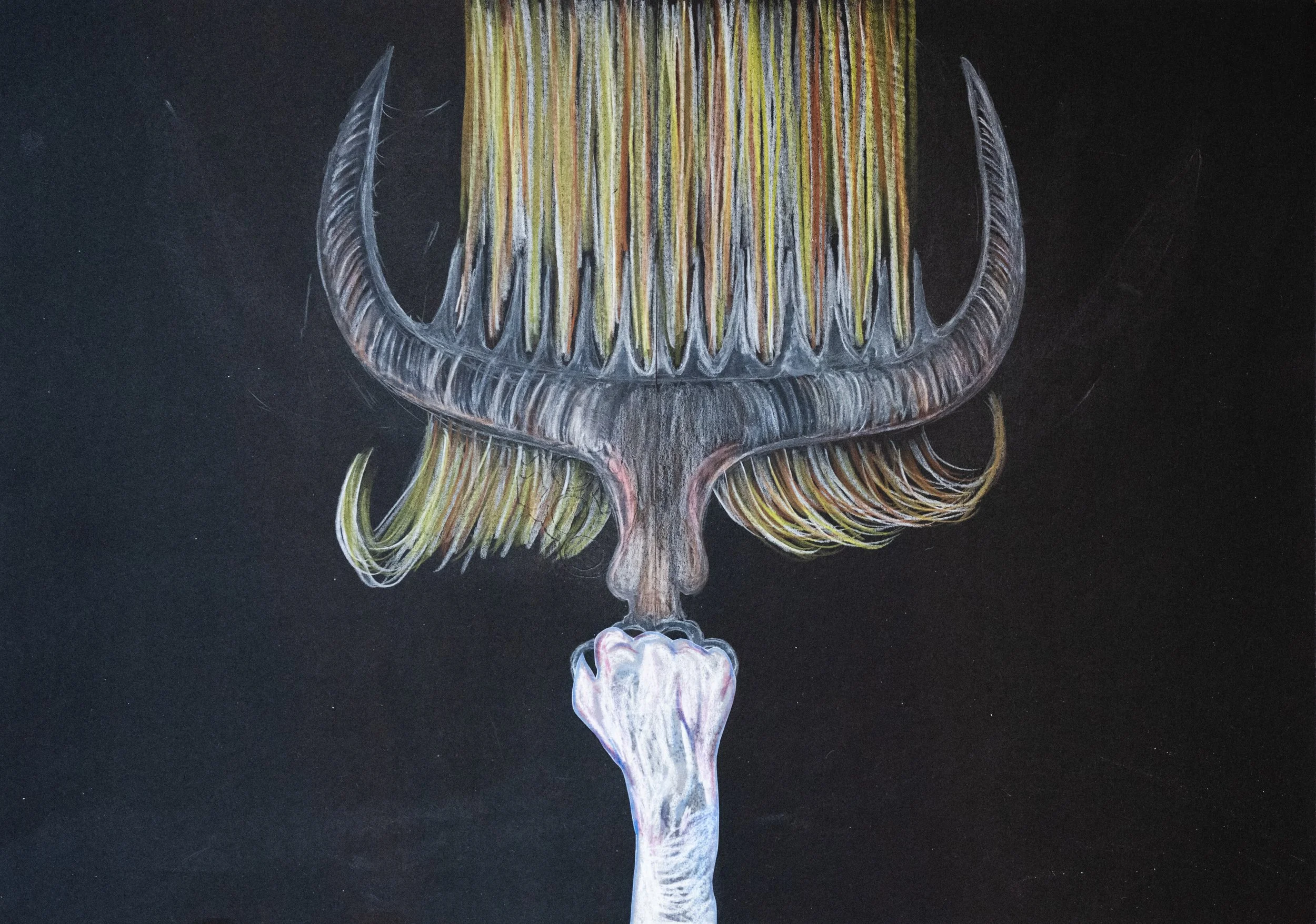
Halveig Villand blends dreamlike scenes with moments of tension, using unconventional tools to explore themes of erosion, vulnerability, and strength in both bodies and architecture. Working across various mediums, Villand is deeply concerned with the transformation of materiality, often weaving poetic fragments and intuitive collages into performative actions. Her installations and video performances feel both strange and captivating, inviting viewers into sensory experiences that unfold in historically rich spaces. With a strong surrealist tone and a penchant for mythological allusions, she creates works that make the weight and gravity of human experience visible, without losing a sense of lightness. Halveig Villand lives and works in Paris. In 2019, she graduated from Chelsea College of Arts. In 2017, she spent six months at the San Francisco Art Institute, where she deepened her practice in sculpture and performance. In 2023, she was in residence at Villa Dufraine, hosted by the Académie des Beaux-Arts under the direction of Jean-Michel Othoniel.
HUA WANG
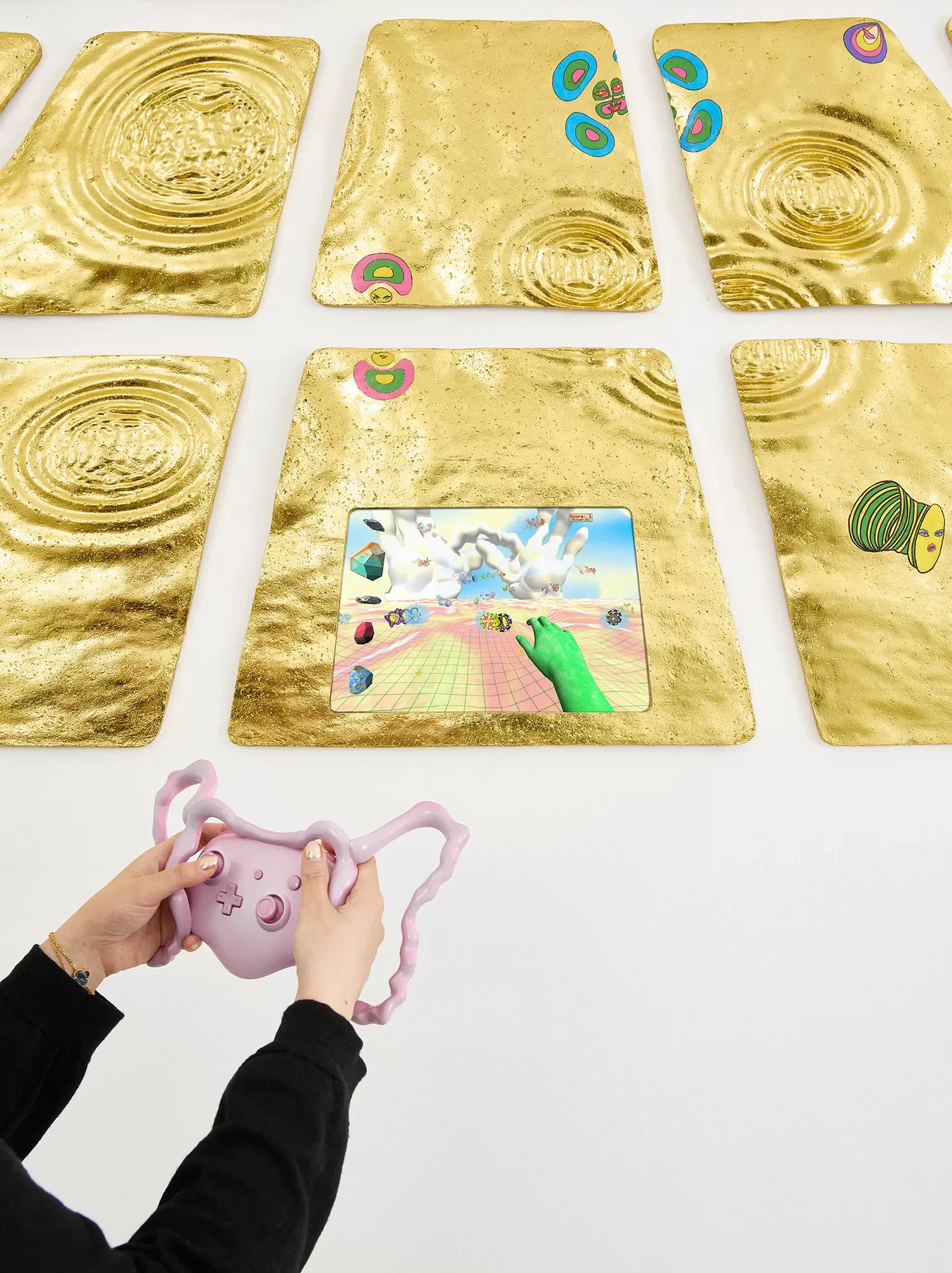
Hua Wang’s artistic practice explores materiality, pop culture, and the impact of global consumerism on nature. Working across sculpture, installation, and animation, she examines themes of anthropocentrism and the tension between artificial and natural entities. Shaped by a childhood immersed in rapidly expanding consumer culture and technological acceleration, her work reflects a deep fascination with manufactured objects and the conditions of a life increasingly distanced from nature. Her works reflect on technological advancement and its implications for humanity, often staging encounters in which organic and synthetic forms collide and co-exist. Hua Wang (Urumqi, China) lives and works in Beijing and Berlin. She began her art studies at the age of 15 at the Fine Arts School Affiliated to CAFA in Beijing and graduated from Central Saint Martins in London in 2012. She subsequently studied in Jingdezhen, the historic center of ceramic production, and at the Royal College of Art in London.
ANTOINE WATERKEYN
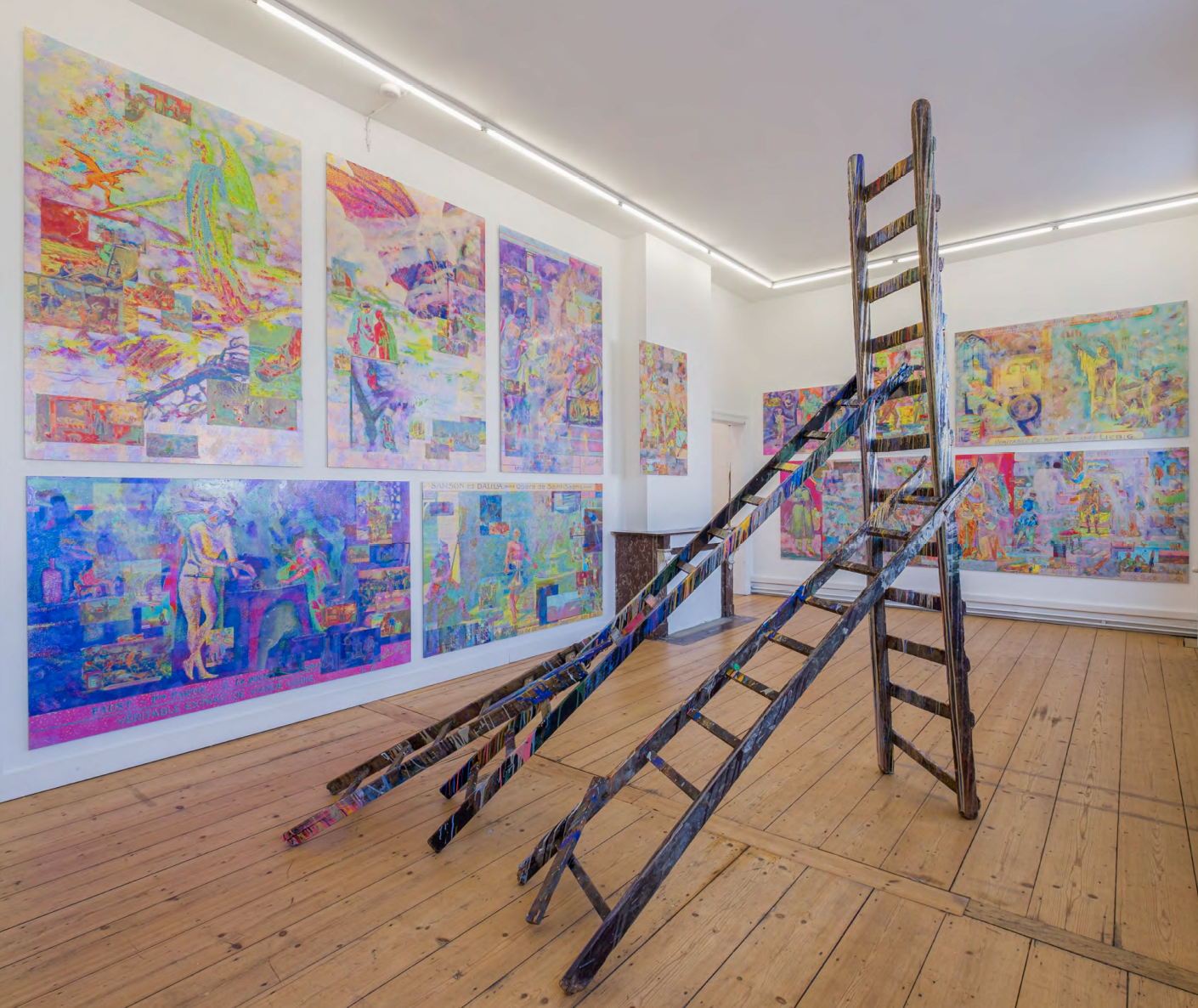
Antoine Waterkeyn is a figurative painter who pursues a sincere and highly personal visual language, far removed from the conventions and strategic positioning prevalent in the art field. He follows an authentic path in art and embraces a transhistorical approach. From the images he gathers and incorporates into his paintings, he allows energy to flow spontaneously. In his painterly practice, he continuously explores media and techniques. He views his work as iconoclastic and consistently subjects it to self-criticism—it must evolve, advance, and move forward.